
Choosing the right deck materials Kansas City homeowners rely on can feel overwhelming when you’re staring at rows of lumber and composite samples at the store. With KC’s 50-degree annual temperature swing and roughly 151 freeze-thaw days each year, the wrong pick means cracking boards, warped railings, and expensive repairs inside five years. The right material, though, adds genuine living space to your home and returns up to 94.9% of your investment at resale, according to the 2025 Zonda Cost vs. Value Report.
In Kansas City, many homeowners prioritize deck materials Kansas City that can withstand the local climate, ensuring a long-lasting investment.
When considering deck materials Kansas City residents often overlook the importance of selecting the best quality materials for durability and aesthetic appeal. The right deck materials Kansas City can transform your outdoor living space into a personal retreat.
This guide breaks down every deck material option available to Kansas City homeowners — real costs, lifespans, maintenance demands, and how each holds up against Missouri weather. We built this from hands-on experience constructing hundreds of decks across the metro and from verified industry data, so you can make a confident decision before the first board gets cut.
Homeowners should consider various deck materials Kansas City offers, each with unique benefits and characteristics.
Choosing the right deck materials Kansas City can greatly influence your overall satisfaction with the space, as well as the longevity of your investment.
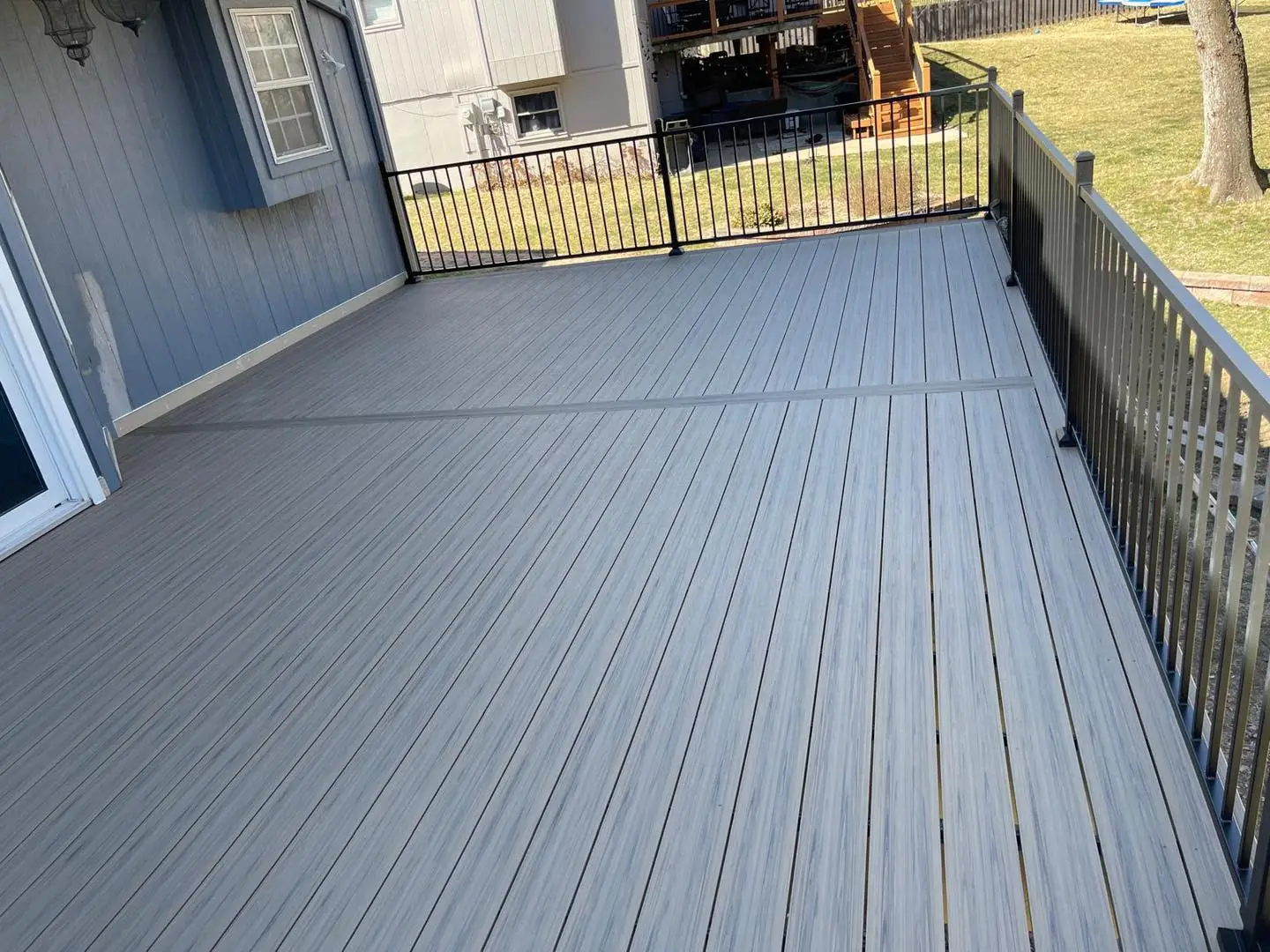
Why Do Deck Materials Kansas City Homeowners Pick Matter So Much?
Kansas City sits in a humid subtropical climate zone where July averages 80°F and January drops to 30°F, according to US Climate Data. That 50-degree swing puts enormous stress on outdoor building materials. Wood fibers absorb moisture during spring rains, expand in summer heat, and crack when winter ice forces them apart.
The result? Decks built with the wrong material — or the right material installed incorrectly — deteriorate faster here than in milder climates. We’ve replaced decks that were only seven years old because the original builder used untreated pine and skipped proper joist spacing. Material choice isn’t just cosmetics. It’s structural.
KC also gets about 38.8 inches of precipitation and 12.5 inches of snow annually. Decks here need materials that resist moisture absorption, mold growth, and UV degradation simultaneously. Not every product checks all three boxes, which is why understanding deck materials Kansas City conditions demand is so important before you spend a dollar.
Commonly used deck materials Kansas City residents favor include wood, composite, and PVC options, each suited for different preferences and climates.
Pressure-Treated Wood: The Budget-Friendly Standard
Pressure-treated lumber remains the most common decking material nationwide, and for good reason. At $3 to $6 per square foot for materials alone (or $20 to $30 installed), it’s the most affordable entry point for homeowners who want a functional outdoor space without a premium price tag, according to HomeGuide’s 2026 cost data.
Many Kansas City homeowners find that pressure-treated wood remains a popular choice among deck materials Kansas City offers.
The treatment process forces chemical preservatives — typically alkaline copper quaternary (ACQ) or copper azole — deep into the wood fibers. The EPA’s guide to wood preservative chemicals confirms these compounds protect against rot, fungal decay, and insect damage. Modern treatments replaced the older CCA (chromated copper arsenate) formulas that raised health concerns.
In Kansas City’s climate, pressure-treated decks last 15 to 20 years with regular maintenance. That means staining or sealing every two to three years, power washing annually, and replacing warped or split boards as they appear. Skip the maintenance, and you’ll see gray, splintering boards within three summers.
Regular maintenance of pressure-treated wood is essential, especially for those who choose this option among deck materials Kansas City has available.
Pros of Pressure-Treated Wood
- Lowest upfront cost of any deck material
- Readily available at every KC lumber yard and big-box store
- Easy to cut, shape, and customize on site
- Accepts stain and paint in any color you want
- Strong structural performance when properly maintained
Cons of Pressure-Treated Wood
- Requires staining or sealing every 2-3 years without exception
- Prone to warping, cracking, and splintering in KC freeze-thaw cycles
- Shorter lifespan than composite or PVC alternatives
- Ongoing maintenance costs erode the initial savings over time
Cedar and Redwood: Natural Beauty With Natural Demands
Cedar is a premium choice among deck materials Kansas City homeowners often prefer due to its aesthetics and natural resistance to decay.
Cedar is the premium natural wood choice for Kansas City decks. Its natural oils resist rot and insects without chemical treatment, and the warm honey tone looks stunning against a green backyard. Cedar decks last 15 to 25 years with proper maintenance, per TimberTech’s lifespan data.
At KC Deck Services, we use Western red cedar for custom deck building projects where homeowners want that classic wood look without pressure-treated chemicals. It’s lighter than treated lumber, which means less stress on your substructure, and it weathers to a silver-gray patina if left unstained. Many of our clients love that natural aging look.
The catch? Cedar costs roughly 30-40% more than pressure-treated wood, and it still needs annual sealing to perform well through KC winters. Redwood offers similar benefits but costs even more and has limited availability in the Midwest. We rarely recommend redwood for Kansas City projects unless the homeowner has a specific design vision that demands it.
One thing worth knowing: cedar’s natural insect resistance comes from thujaplicin, an organic compound in the wood’s heartwood. The sapwood (lighter-colored outer boards) doesn’t carry this protection. When shopping for cedar deck materials Kansas City suppliers stock, always confirm you’re getting heartwood-grade boards for the deck surface.
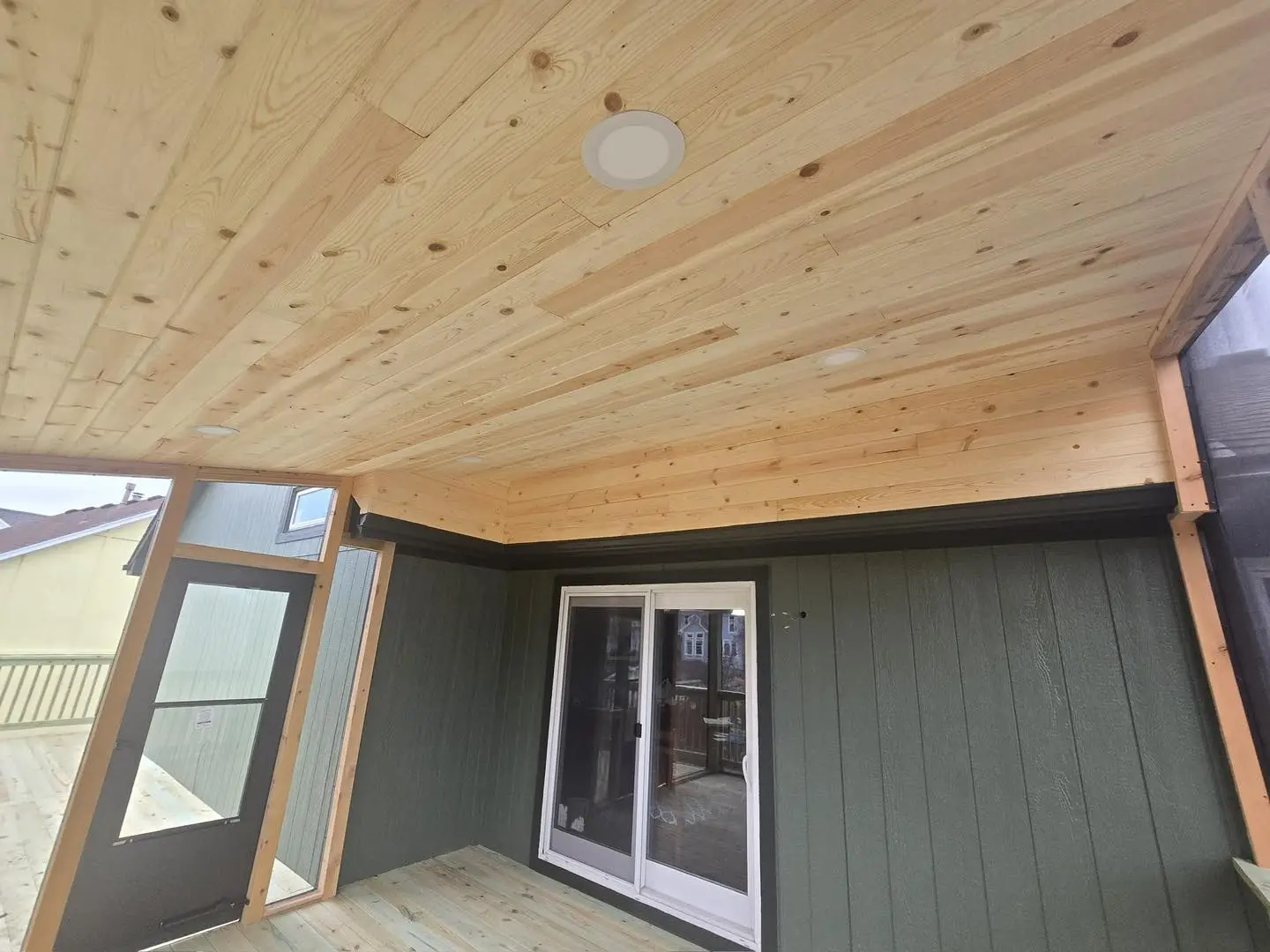
Composite Decking: The Low-Maintenance Contender
Composite is another widely accepted option among deck materials Kansas City homeowners appreciate for its low maintenance requirements.
Composite decking has exploded in popularity over the past decade. The global composite decking market hit $4.195 billion in 2025 and is projected to reach $7.96 billion by 2034, growing at 7.37% annually, per Business Research Insights. There’s a reason for that growth — homeowners are tired of annual staining and sealing.
Composite boards blend wood fibers with plastic polymers, creating a material that resists moisture, won’t splinter, and never needs staining. Brands like Fiberon (which we carry at KC Deck Services) offer realistic wood-grain textures in dozens of colors across three tiers. Material costs run $5 to $14 per square foot, with fully installed prices of $35 to $45 per square foot.
Here’s the cost math that surprises most KC homeowners: within five years, a wood deck’s total ownership cost (including staining, sealing, and repairs) actually exceeds composite’s total cost. By year nine, the gap widens to roughly $4,000 in composite’s favor, according to HomeGuide. You pay more upfront, but you stop paying after that.
How Composite Handles Kansas City Weather
Composite’s moisture resistance makes it particularly well-suited for KC’s wet springs and freeze-thaw winters. Unlike wood, composite boards don’t absorb water, so they won’t crack when trapped moisture freezes and expands. They also resist mold and mildew growth — a real concern during our humid July and August months.
Choosing the right composite among deck materials Kansas City homeowners prefer can lead to a hassle-free outdoor space.
The tradeoff? Composite can get noticeably hot underfoot in direct summer sun. Dark colors especially. If your deck faces south or west without shade, consider lighter composite colors or a covered design. We’ve built hundreds of composite decks across Kansas City — see examples in our project portfolio — and can help you pick the right color and configuration for your sun exposure.
PVC Decking: Maximum Durability at Premium Cost
PVC (polyvinyl chloride) decking contains zero wood fibers. It’s entirely synthetic, which makes it the most moisture-resistant option available. PVC won’t rot, warp, crack, or support mold growth under any weather conditions Kansas City can throw at it.
PVC decking is another alternative in the group of deck materials Kansas City residents might consider, particularly for areas with constant moisture.
The durability comes at a price — PVC typically costs 20-30% more than composite. But for homeowners building near pools, hot tubs, or low-to-grade applications where moisture contact is constant, PVC makes practical sense. It’s also the lightest decking material, which opens up design options for elevated deck and outdoor or cantilevered structures.
We recommend PVC for specific situations rather than as a default. Most Kansas City homeowners find composite gives them the durability they need at a better price point. But when the project calls for PVC, it delivers without compromise.
How Much Does Each Deck Material Cost in Kansas City?
When evaluating costs, many homeowners find that deck materials Kansas City offers vary significantly based on type and quality.
Cost is usually the deciding factor when comparing deck materials Kansas City contractors offer. Here’s what Kansas City homeowners should expect to pay in 2026, based on our project experience and current industry data:
The right deck materials Kansas City residents choose can enhance property value and appeal, making informed decisions crucial.
| Material | Material Cost (per sq ft) | Installed Cost (per sq ft) | Lifespan | Annual Maintenance |
|---|---|---|---|---|
| Pressure-Treated Wood | $3 – $6 | $20 – $30 | 15-20 years | Stain/seal every 2-3 yrs |
| Cedar | $5 – $8 | $25 – $35 | 15-25 years | Seal annually |
| Composite (Fiberon) | $5 – $14 | $35 – $45 | 25-30 years | Occasional cleaning only |
| PVC | $7 – $16 | $40 – $50 | 25-30+ years | Occasional cleaning only |
At KC Deck Services, our composite decks start at $95 per square foot and wood decks start at $65 per square foot (fully built, including labor, materials, and design). These prices include the substructure, railings, and stairs — not just the deck boards. Check our pricing page for the full breakdown and to try our online deck estimator.
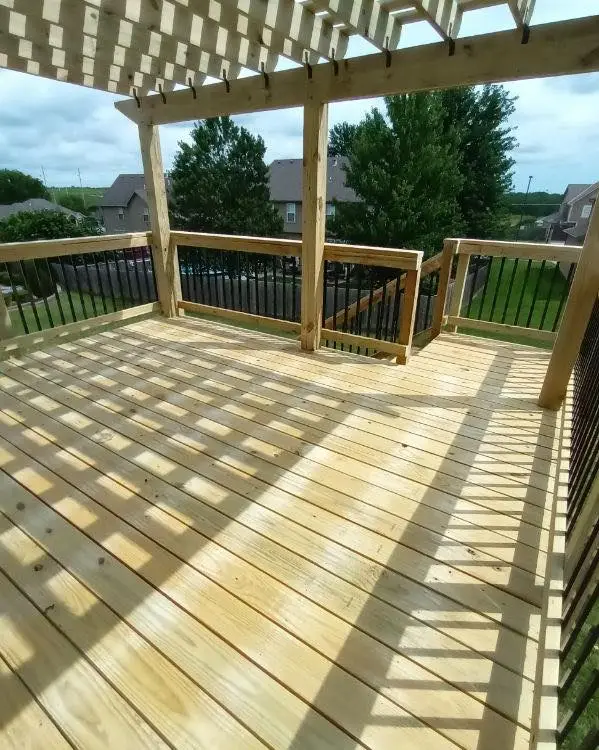
What About Deck Material ROI and Resale Value?
Understanding the ROI of different deck materials Kansas City homeowners may select is vital for ensuring a rewarding investment.
Both wood and composite decks rank among the highest-ROI home improvement projects in the country. The 2025 Zonda Cost vs. Value Report found that a wood deck addition costs an average of $18,263 and recoups 94.9% at resale ($17,323). Composite comes in at $25,096 cost with 88.5% recoup ($22,199).
For context, the average ROI across all home remodeling projects is just 60%. Eight of the ten highest-ROI projects in 2025 were exterior upgrades, per the Journal of Light Construction. A deck isn’t just an outdoor room — it’s one of the smartest investments you can make in your home.
In the Kansas City market, where outdoor living space is a strong selling point for buyers, we’ve seen decks push homes to faster offers and higher sale prices. Buyers here expect usable backyards, and a well-built deck delivers exactly that. Whether you’re planning to sell soon or stay for decades, the investment pays for itself.
For many, the choice of deck materials Kansas City homeowners utilize can make all the difference in enhancing outdoor living spaces.
Which Deck Material Is Best for Kansas City’s Climate?
After building decks across the KC metro for years, here’s our honest recommendation: composite is the best all-around choice for most Kansas City homeowners. The 151 annual freeze-thaw days, humid summers, and 38.8 inches of rain make this a tough environment for wood that doesn’t get consistent maintenance.
Composite handles all of it without ongoing work from you. No staining. No sealing. No replacing cracked boards every spring. And while it costs more upfront, the total cost of ownership tips in composite’s favor within five years.
That said, we still build plenty of cedar and pressure-treated decks for homeowners who prefer natural wood’s look and feel — or who want the lower entry price. Every material works in KC if it’s installed correctly and maintained appropriately. The real question is how much ongoing work you’re willing to put in year after year.
Kansas City Building Codes for Deck Materials
Kansas City adopts the International Residential Code (IRC), and Section R507 governs deck construction specifically — including approved materials, joist spacing, ledger board attachment, and footing depth. Any deck more than 30 inches above grade requires a building permit from the City of Kansas City Permits Division.
Local building codes also dictate appropriate deck materials Kansas City builders must adhere to for safety and durability.
An estimated 40 million decks exist in the United States, and roughly half aren’t built to current building codes, per the North American Deck and Railing Association (NADRA). That’s a genuine safety issue. When we build a deck, we handle all permitting and ensure every detail meets or exceeds current IRC requirements. It protects your family and your investment — and it’s never optional for us.
Not all deck materials Kansas City building codes approve carry the same structural ratings. Composite and PVC boards, for instance, can’t be used as structural members — they’re surface-only materials. The substructure underneath still needs pressure-treated lumber or steel framing. A knowledgeable builder handles this automatically, but it’s worth understanding if you’re comparing bids.
The Sustainability Factor in Choosing Deck Materials
The sustainability of deck materials Kansas City homeowners consider is becoming increasingly important in modern construction.
Eco-friendliness matters to more homeowners than ever. A 2025 Farnsworth Group study found that 68% of homeowners want eco-friendly materials in outdoor renovations. Composite decking fits this trend well — many brands use recycled wood fibers and recycled plastics, diverting waste from landfills.
Fiberon boards, which we install at KC Deck Services, contain up to 95% recycled content. Cedar and responsibly sourced wood also carry environmental benefits as renewable resources. The choice depends on which sustainability factors matter most to you — recycled content, renewability, or longevity. The longest-lasting option produces the least waste over time, which gives composite another edge in the sustainability conversation.
The broader decking and railing market grew from $11.94 billion in 2025 to a projected $12.7 billion in 2026, reflecting a 6.4% CAGR driven largely by demand for sustainable composite products, per Research and Markets.
Homeowners should evaluate the environmental impact of deck materials Kansas City projects utilize to align with their values.
Frequently Asked Questions
What is the best deck material for Kansas City weather?
Composite decking handles Kansas City’s freeze-thaw cycles, humidity, and precipitation better than wood because it doesn’t absorb moisture. It lasts 25-30 years without staining or sealing. Cedar and pressure-treated wood also work well with proper annual maintenance.
Overall, deck materials Kansas City homeowners choose should accommodate local climate conditions to ensure longevity and satisfaction.
How much does a composite deck cost in Kansas City?
Composite deck materials cost $5 to $14 per square foot, with fully installed prices running $35 to $45 per square foot for materials and labor. At KC Deck Services, complete composite deck builds start at $95 per square foot including design, substructure, railings, and stairs.
Is composite decking worth the extra cost over wood?
The choice of materials directly affects the total cost of ownership for deck materials Kansas City homeowners select for their spaces.
Yes, for most homeowners. While composite costs 40-60% more upfront than pressure-treated wood, total ownership costs flip within five years because composite requires zero staining, sealing, or board replacement. By year nine, wood’s maintenance costs push its total roughly $4,000 higher than composite.
How long does a wood deck last in Kansas City?
Pressure-treated wood decks last 15-20 years with regular maintenance including staining every 2-3 years and annual power washing. Cedar decks last 15-25 years with annual sealing. Without maintenance, wood decks in KC’s climate can deteriorate significantly within 5-7 years due to freeze-thaw damage.
Understanding how long different deck materials Kansas City homeowners opt for last is crucial for making an informed decision.
Do I need a permit to build a deck in Kansas City?
Yes, if your deck will be more than 30 inches above grade. The City of Kansas City requires a building permit and inspection for elevated decks. KC Deck Services handles all permitting as part of every project so you don’t have to navigate the process yourself.
What deck material has the best resale value?
When evaluating options, keep in mind that deck materials Kansas City contractors recommend can vary based on project specifics.
Wood deck additions recoup 94.9% of their cost at resale, while composite recoups 88.5%, per the 2025 Zonda Cost vs. Value Report. Both far exceed the 60% average ROI for all home improvement projects. In the Kansas City housing market, a quality deck is one of the highest-return upgrades available.
Does KC Deck Services offer free estimates for deck projects?
Yes. Every estimate is completely free with no obligation. We’ll visit your property, discuss your material preferences and design goals, and provide a detailed quote with no pressure. Request your free estimate here or call us at 816-882-7802.
Ready to Choose Your Deck Materials?
In conclusion, the right deck materials Kansas City homeowners ultimately select can create beautiful, functional outdoor spaces.
Picking the right deck materials Kansas City homeowners need comes down to three factors: your budget, how much maintenance you’re willing to do, and how long you want the deck to last. Composite gives you the best balance of durability and low maintenance for KC’s demanding climate. Wood gives you a lower entry price and classic aesthetics that many people love. Either way, professional installation makes the difference between a deck that lasts and one that doesn’t.
KC Deck Services is a family-owned Kansas City deck builder with hands-on experience in every material covered in this guide. We’ll help you pick the right option for your home, your budget, and your backyard — and we’ll build it to code, on time, and at a fair price. Get your free estimate today or call us at 816-882-7802.
For additional guidance on deck materials Kansas City homeowners trust, reach out to us for expert advice tailored to your needs.