
The right deck maintenance tips at the right time of year make the difference between a deck that lasts 25 years and one that needs replacement at 12. Kansas City’s climate doesn’t give outdoor structures a break — 151 freeze-thaw days, 38.8 inches of rain, humid summers that breed mold, and UV exposure that fades and dries unprotected wood. Each season brings a different threat, and each one requires a specific maintenance response.
These deck maintenance tips will ensure your deck remains in top condition year after year.
This seasonal deck maintenance guide is built from our hands-on experience maintaining and repairing hundreds of decks across the Kansas City metro. We’ve organized it by season so you know exactly what to do, when to do it, and why each step matters for your deck’s long-term performance. Whether you have a brand-new composite deck or a 15-year-old cedar platform, every recommendation here applies to your situation with material-specific notes where it matters.
Incorporating the right deck maintenance tips into your routine can extend the life of your deck significantly.
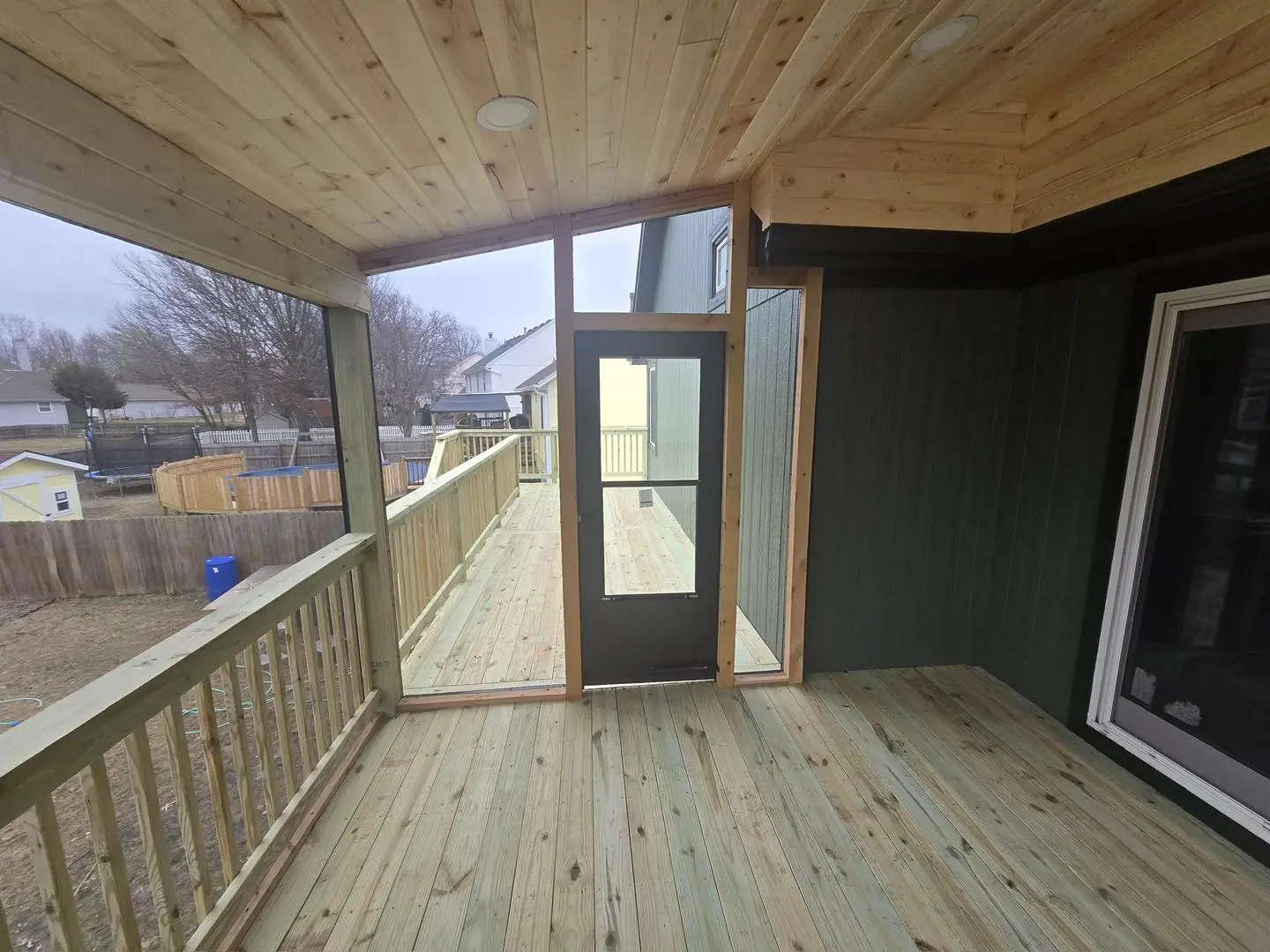
Spring Deck Maintenance Tips: Assess Winter Damage and Prepare for Heavy Use
Spring is the most important season for deck maintenance in Kansas City. Your deck just survived months of freeze-thaw cycling, snow loads, and ice. Before anyone fires up the grill, you need to know what shape the structure is in. These spring inspections and cleaning steps catch problems early when they’re still cheap to fix.
These deck maintenance tips will guide you through the necessary steps to keep your outdoor space safe and inviting.
1. Do a Full Structural Inspection
Before anything cosmetic, check the structural bones. An estimated 20 million U.S. decks aren’t built to current code, per the North American Deck and Railing Association (NADRA). Even code-compliant decks develop issues over Kansas City winters.
Walk every square foot and check:
- Ledger board — Look for gaps between the ledger and house wall. Check flashing for damage or displacement. This is the #1 failure point in deck collapses.
- Support posts — Push firmly on each post. Any movement indicates footing problems or rot at the base.
- Joists — Look underneath for cracking, sagging, or dark discoloration (signs of moisture damage and rot).
- Railings — Grab and push each section. The IRC requires railings to withstand 200 lbs of lateral force.
- Fasteners — Check for popped nails, corroded screws, and loose bolts. Freeze-thaw cycles work fasteners loose each winter.
- Surface boards — Feel for soft spots (rot), check for cracks wider than 1/8 inch, and note any boards that flex or bounce underfoot.
This inspection takes 30 minutes and could save you $750 to $2,500 in repair costs by catching problems early, per Angi’s 2026 data. If anything structural looks compromised, call a professional before using the deck. KC Deck Services offers free inspections for Kansas City homeowners.
2. Deep Clean the Deck Surface
Winter leaves behind a layer of grime, leaf debris, pollen residue, and potentially mold or mildew. Spring cleaning is one of the most essential deck maintenance tips because it prevents organic material from trapping moisture against the wood.
Remember, following these deck maintenance tips can prevent costly repairs down the line.
- Sweep the entire surface thoroughly, including corners and stair treads
- Clear debris from between board gaps using a putty knife or deck gap cleaner
- Remove any furniture, planters, or mats to inspect underneath them
- Apply a deck-specific cleaning solution (not household bleach, which damages wood fibers)
- Use a gentle wash — 500-1,200 PSI max for wood decks, fan tip only. Avoid common pressure washing mistakes that damage the surface.
3. Test Your Sealant and Schedule Staining
Sprinkle water on several spots across the deck. If it beads up, your sealant is still protecting the wood. If it soaks in within 30 seconds, you need to re-seal before summer.
In Kansas City, the ideal staining window opens in late April through early June when temperatures stay above 50°F and you can count on 48+ hours of dry weather after application. Don’t stain in direct sun or when rain is forecast within two days — the product won’t cure properly.
Summer Deck Maintenance Tips: Protect Against Heat, UV, and Heavy Use
Summer is when your deck works hardest. More foot traffic, more furniture, more grilling, and constant UV bombardment from the Kansas City sun. These summer care strategies keep your deck performing through the heaviest use months.
Utilizing these deck maintenance tips will keep your deck looking its best during peak usage.
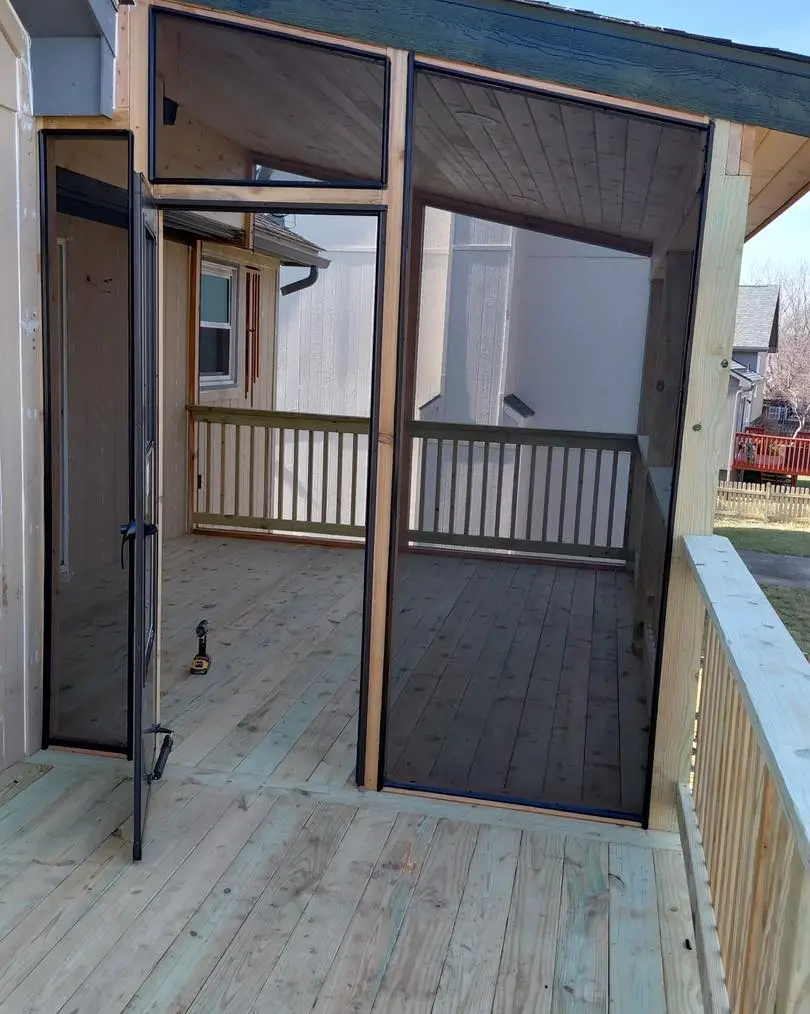
4. Monthly Surface Cleaning
A quick sweep and rinse once a month prevents buildup. Pollen, food debris from grilling, sunscreen residue, and bird droppings all create surface stains that set permanently if left through the summer. Use a garden hose with a nozzle — you don’t need a pressure washer for routine monthly cleaning.
Regular adherence to these deck maintenance tips is essential for maintaining the appearance and integrity of your deck.
5. Manage Heat on Composite Decks
Composite decking doesn’t need staining or sealing, but it does get hot in direct sun. Dark-colored composite boards in full Kansas City sun can reach 140°F+ at peak summer. A few practical deck maintenance tips for composite owners:
Implementing these deck maintenance tips will also help manage heat effectively on your composite deck.
- Place outdoor rugs in barefoot traffic areas (entries, around seating)
- Use furniture pads under heavy items to prevent compression marks
- Rinse the deck surface on extremely hot days — water cools it immediately
- Consider shade structures like pergolas for decks with south or west exposure
6. Check for Insect Activity
Kansas City is home to carpenter ants and termites that love moist, untreated wood. Summer is peak activity season. Look for:
Taking these deck maintenance tips into account can help you avoid pest infestations.
- Small piles of sawdust (frass) near the base of posts or under the deck
- Hollow-sounding wood when tapped
- Visible tunnels or bore holes in wood surfaces
- Winged insects emerging from wood in spring or early summer
If you find evidence of insect damage, address it immediately. Carpenter ants and termites compromise structural integrity over time. The EPA’s wood preservative guide covers approved treatment chemicals for residential use.
7. Trim Vegetation
Plants growing within 12 inches of deck structures trap moisture, restrict airflow, and create pathways for insects. Trim bushes, vines, and tree branches that touch or overhang the deck. Keep the area underneath the deck clear of tall weeds and grass.
Fall Deck Maintenance Tips: Prepare for Kansas City’s Harsh Winter
These deck maintenance tips are crucial for preparing your deck for the winter months.
Fall maintenance is your last chance to protect the deck before freeze-thaw season begins. These deck maintenance tips set your deck up to survive winter with minimal damage.
8. Remove All Organic Debris
Leaves are the biggest fall maintenance item. Wet leaves trapped on deck boards create moisture pockets that promote mold, staining, and rot. Left through winter, they freeze to the surface and can cause permanent discoloration.
Following these deck maintenance tips can help prevent moisture problems during fall.
- Clear leaves weekly during peak fall (October through mid-November in KC)
- Clean between board gaps thoroughly — this is where trapped debris does the most damage
- Remove leaves from under the deck as well, especially around post bases
9. Touch Up Sealant in High-Traffic Areas
If you stained in spring, check the high-traffic zones in fall. Entry points, stair treads, and areas near the grill see the most wear. A quick touch-up coat on these spots before winter provides extra protection where it’s needed most — far better than re-coating the entire deck.
These deck maintenance tips will ensure that your high-traffic areas are well protected.
10. Verify Drainage Before Freeze Season
Water that can’t drain is water that will freeze and expand. Before the first hard freeze (typically late November in Kansas City):
- Confirm all board gaps are clear of debris so water drains through
- Check that the ground under the deck slopes away from the house
- Clear gutters and downspouts near the deck — overflow water pooling on the deck surface is a winter damage accelerator
- Move planters and containers off the deck surface to prevent trapped moisture rings
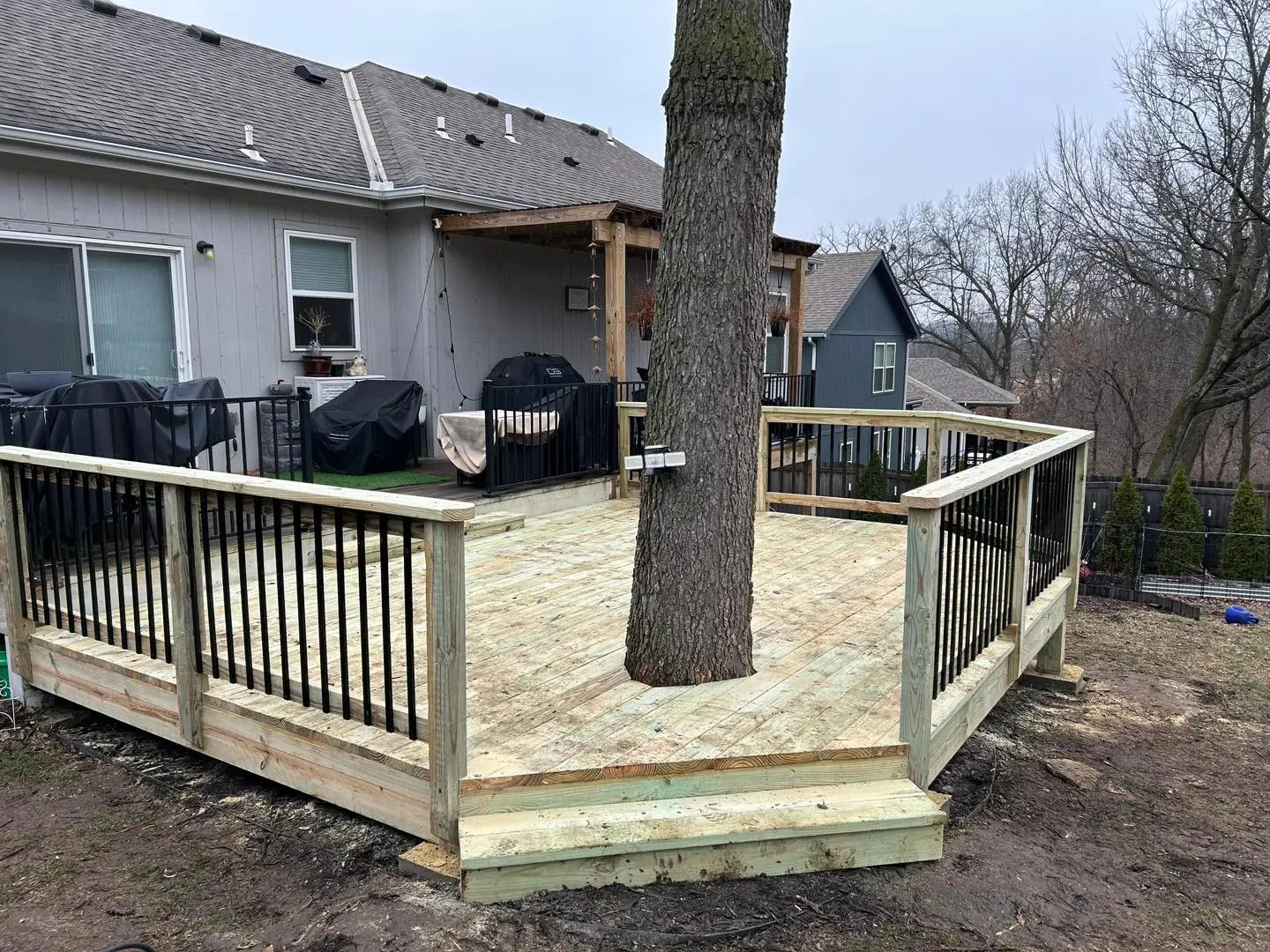
Keep your deck looking new year after year by following these essential deck maintenance tips.
Winter Deck Maintenance Tips: Minimize Freeze-Thaw Damage
Kansas City winters average 12.5 inches of snowfall and 151 days at or below freezing, per Weather Spark climate data. Your deck takes a beating from December through February. These winter precautions minimize the damage.
Winter demands its own specific deck maintenance tips to prevent damage from snow and ice.
11. Remove Snow Promptly and Properly
Snow sits heavy (fresh snow weighs 5-20 lbs per cubic foot depending on moisture content) and traps moisture against the deck surface as it slowly melts. Remove it within 24 hours of each snowfall.
- Use a plastic shovel only — Metal shovels scratch composite surfaces and gouge wood grain
- Push with the grain on wood decks, never across it
- Leave a thin layer rather than scraping to bare wood — you’re more likely to damage the surface trying to remove every last flake
- Never use a snowblower on a deck — the auger will destroy both wood and composite surfaces
12. Avoid Chemical De-icers
Rock salt (sodium chloride) and chemical de-icing products accelerate deterioration on both wood and composite decks. Salt draws moisture into wood grain, creating deeper freeze-thaw penetration. On composite, some chemical de-icers can cause discoloration or surface damage.
Safe alternatives:
- Sand for traction (sweep it off in spring)
- Calcium magnesium acetate (CMA) — less corrosive than salt
- Kitty litter for temporary traction in icy spots
13. Mid-Winter Visual Check
After major storms (heavy snow, ice storms, high winds), do a quick visual inspection. Look for:
These deck maintenance tips can help you stay proactive about your deck’s health during winter storms.
- Ice dams forming where the deck meets the house
- Snow loads accumulating unevenly (indicates possible structural deflection)
- Fallen tree limbs resting on the deck or railings
- Icicles forming at the deck perimeter (suggests drainage issues)
Annual Deck Maintenance Checklist — Quick Reference
| Season | Task | Time Required | Cost |
|---|---|---|---|
| Spring | Full structural inspection | 30 minutes | Free |
| Spring | Deep clean + debris removal | 2-4 hours | $0-50 (cleaning supplies) |
| Spring | Sealant test + staining (if due) | 1-2 days | $500-1,600 |
| Summer | Monthly surface cleaning | 30-60 minutes | Free |
| Summer | Insect inspection | 15 minutes | Free |
| Summer | Vegetation trimming | 30 minutes | Free |
| Fall | Weekly leaf removal | 15-30 minutes | Free |
| Fall | Sealant touch-up (high-traffic areas) | 1-2 hours | $50-150 |
| Fall | Drainage verification | 15 minutes | Free |
| Winter | Snow removal after each storm | 15-30 minutes | Free |
| Winter | Post-storm visual check | 10 minutes | Free |
Total annual time investment: approximately 15-20 hours spread across the year. Total cost: $550 to $1,800 in a staining year, near-zero in off years. Compare that to the $2,000 to $15,000+ cost of repairing or replacing a neglected deck, and preventive maintenance becomes the obvious financial choice. Print this checklist and keep it with your home maintenance records — your future self (and your wallet) will thank you.
Wood vs. Composite: How Maintenance Differs by Material
Your maintenance workload depends heavily on what your deck is made of. Understanding the difference helps you plan realistic expectations and budget for each season.
Wood decks (pressure-treated pine, cedar, redwood) demand the full maintenance calendar above. Annual cleaning, staining every two to three years, regular fastener checks, and vigilant moisture management are non-negotiable for wood. Skip any step for more than one season, and you’re shortening the deck’s life measurably. The total ownership cost of a wood deck — including regular maintenance — exceeds composite by roughly $4,000 over nine years, per HomeGuide’s cost analysis.
Composite decks (Fiberon, TimberTech, Trex, and similar products) eliminate the staining, sealing, and sanding requirements entirely. Your maintenance calendar shrinks to seasonal cleaning with soap and water, debris clearing from board gaps, and structural connection checks. That’s it. No stain. No seal. No sanding splinters. This reduced workload is a major reason the composite decking market has grown to $4.195 billion globally and continues expanding at 7.37% annually, per Business Research Insights.
If you’re choosing between materials and maintenance effort is a deciding factor, read our complete guide to choosing deck materials for Kansas City for a full cost and lifespan comparison.
When Maintenance Alone Isn’t Enough: Signs You Need Professional Help
Regular maintenance extends your deck’s life dramatically, but it can’t fix structural damage or reverse years of neglect. Call a professional deck contractor when you encounter:
- Soft or spongy wood anywhere on the deck (indicates internal rot)
- Visible sagging or deflection in the deck frame
- The deck pulling away from the house at the ledger board
- Railings that move when pushed firmly
- Multiple boards needing replacement at once
- Stair stringers that are cracked or separated
- The deck is more than 20 years old and has never been professionally inspected
KC Deck Services offers free deck inspections and honest assessments for homeowners across Kansas City, Lee’s Summit, Overland Park, and surrounding communities. If your deck just needs a seal coat, we’ll tell you. If it needs structural work, we’ll explain exactly what needs to happen and why. No pressure, no upselling — just the honest approach our clients expect from a family-owned contractor.
For further assistance, our deck maintenance tips are designed to guide you through the process.
Frequently Asked Questions About Deck Maintenance Tips
How often should I maintain my deck in Kansas City?
Deck maintenance in Kansas City follows a seasonal schedule. Spring requires a full inspection and deep cleaning. Summer needs monthly surface cleaning and insect checks. Fall requires leaf removal and drainage verification. Winter means prompt snow removal after each storm. Staining or sealing is needed every 2-3 years for pressure-treated wood and annually for cedar.
What is the most important deck maintenance tip for Kansas City weather?
Keeping your sealant current is the single most impactful deck maintenance tip for KC’s climate. With 151 freeze-thaw days and 38.8 inches of annual rain, unsealed wood absorbs moisture that freezes, expands, and cracks the grain from within. A fresh seal coat every 2-3 years prevents this cycle.
Do composite decks need maintenance?
Composite decks need significantly less maintenance than wood — no staining, sealing, or sanding. They still need regular cleaning (soap and water, 2-4 times per year), occasional debris clearing from board gaps, and seasonal inspections of fasteners and railing connections. Composite is not maintenance-free, but it is dramatically low-maintenance.
Can I use a pressure washer on my deck?
Yes, but only at the correct PSI. Use 500-1,200 PSI max for softwood decks with a 25° or 40° fan tip, keeping the nozzle 12-18 inches from the surface. Composite decks should not exceed 1,300 PSI. Higher pressure causes permanent surface damage called “tiger striping.” See our guide to avoiding deck care mistakes for details.
How much does annual deck maintenance cost?
Annual maintenance costs $550 to $1,800 in a staining year (cleaning supplies + stain/sealant), and near-zero in off years when the sealant is still intact. Compare this to $2,000 to $15,000+ for repairing or replacing a neglected deck. Preventive maintenance delivers a 5:1 return on investment.
Does KC Deck Services offer deck maintenance services?
Yes. We provide power washing, staining, sealing, repairs, and full deck inspections. Request a free estimate or call 816-882-7802. We also offer complete deck building services if your maintenance inspection reveals it’s time for a replacement.
Protect Your Investment With Consistent Deck Maintenance
Your deck is one of the highest-return investments in your home — but only if you protect it. Following these seasonal deck maintenance tips keeps your deck safe, beautiful, and structurally sound through Kansas City’s demanding four-season climate. The time investment is minimal. The cost is modest. And the alternative — watching a $20,000+ deck deteriorate into a safety hazard — is entirely preventable.
By following these deck maintenance tips, you’ll protect your investment and ensure its longevity.
Start with this spring’s inspection. Do the water test. Clean the gaps. Check the structure. And if anything looks concerning, give KC Deck Services a call at 816-882-7802. We’ve been maintaining and building decks across Kansas City for years, and we’re here to help yours last as long as possible.
Don’t forget, implementing these deck maintenance tips can lead to a beautiful and functional outdoor space.